Hailed as Devbhoomi, the land of Gods, Uttarakhand today faces a situation that, in biblical terms, can only be called blasphemy. In a country where books are revered as the embodiment of Goddess Saraswati, the recurring phenomenon of paper leaks exposes the unsettling face of our society. The ideals of equity and merit are steadily eroding, leaving behind the harsh reality where money finds its way even into government examinations. Presently, Uttarakhand is grappling with a grave crisis of migration from its hills. Due to the absence of proper educational facilities and the lack of meaningful employment opportunities, the youth of mountain villages are compelled to move to the plains. According to data from the state migration commission, between 2018 and 2022 nearly 3.3 lakh people left the state in search of work and education. Of these, around 3 lakhs were temporary migrants from 6,436 villages, while about 28,631 people moved permanently from 2,067 villages.
What once thrived as vibrant villages full of youthful vigour now mourn the departure of their children. In several constituencies, voters arrive in buses during elections only to return to the cities soon after casting their vote. Villages that once held life and laughter have now turned into ghost settlements. In such challenging times, government examinations became the only ray of hope for families. In Uttarakhand, these crucial state-level examinations are conducted by the Uttarakhand Subordinate Services Selection Commission (UKSSSC). This body is entrusted with recruiting candidates for Group C posts in various government departments. To put it simply: if UPSC recruits officers for the nation, and UKPSC for the state’s gazetted ranks, then UKSSSC selects the very backbone of Uttarakhand’s government workforce.
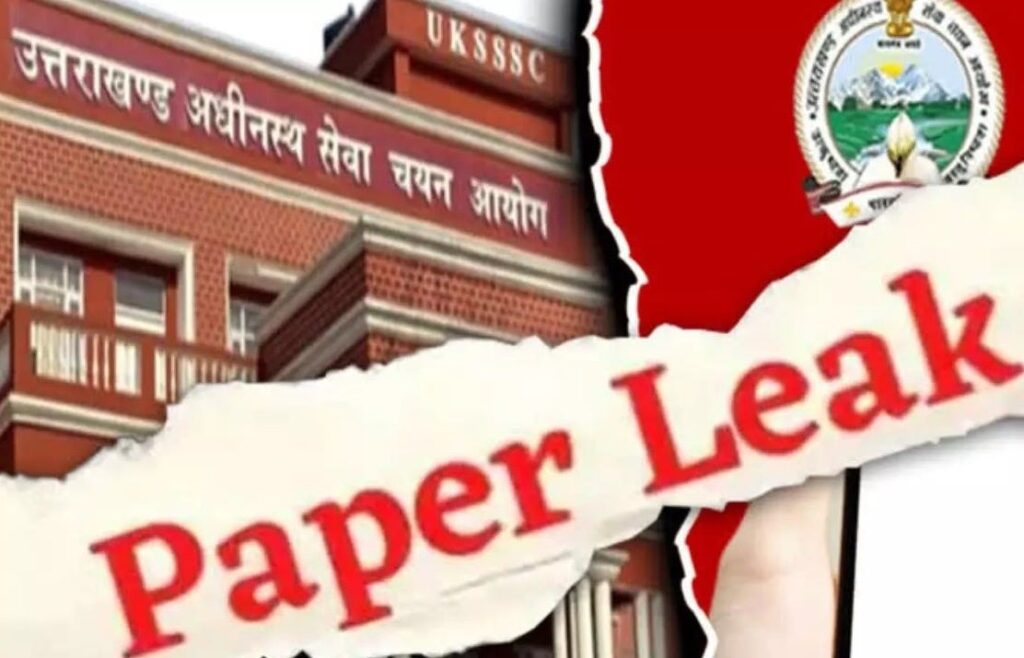
The UKSSSC was entrusted with the responsibility of shaping the future of Uttarakhand’s youth. For countless families, a secure government job meant their children could stay back in their native state instead of being forced to migrate to the plains or metro cities. A job in the state meant stability, dignity, and the chance to build a life close to their roots. Parents and students alike placed their trust in the commission. But those in power betrayed this trust. Instead of treating recruitment as a sacred duty, they saw it as a business opportunity. The dreams of aspirants were reduced to deals struck behind closed doors. Question papers were leaked, sold, and bartered, as if the future of the youth was just another commodity. What should have been an institution of fairness and hope slowly turned into a symbol of corruption. Year after year, paper leaks became a recurring phenomenon. Each scandal pushed more young people into despair. Each scam deepened the wounds of a society already struggling with migration and unemployment. For the youth of Uttarakhand, UKSSSC became less a gateway to opportunity and more a reminder of how easily their future could be stolen.
In the wake of repeated scandals, the Uttarakhand government proudly introduced the Uttarakhand Competitive Examination (Measures for Control and Prevention of Unfair Means in Recruitment) Act, 2023. It was hailed as the first such anti-cheating law in the country. On paper, the Act sounded tough. It promised jail terms of 3 years for candidates caught cheating, and up to life imprisonment with fines of crores for organized conspirators such as printing presses, exam officials or coaching centres. The government declared that offences would be non-bailable, assets could be seized, and guilty candidates barred from future exams. But beyond the big headlines, the cracks are obvious. The language of the law lacks precision, and the provisions appear overly broad, conflating individual instances of misconduct with large-scale conspiracies. Alarmingly, candidates can be debarred from future exams merely upon the filing of a chargesheet, long before any court conviction. Despite its harsh rhetoric, the law has failed to dismantle the core networks responsible for recurring leaks. As recent events have shown, the paper mafia remains active, and the deeper issues such as poor exam centre security and internal collusion, remain largely unaddressed. The legislation is a red herring. Rather than being a solution, has become more of a symbolic gesture, a structural fix.
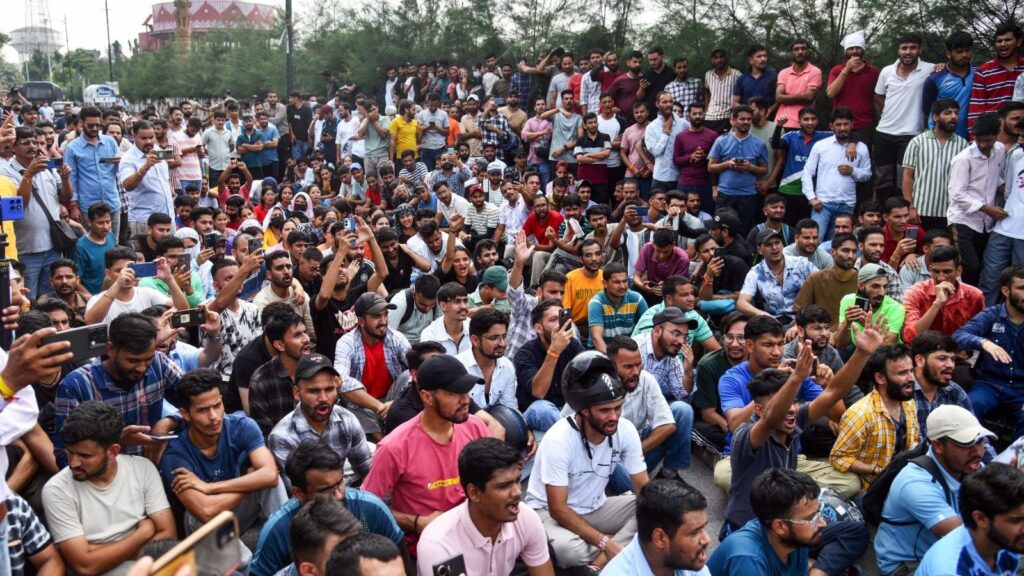
Frustrated and betrayed, many have taken to peaceful protests, most notably at Dehradun’s Parade Ground. Through sit-ins and hunger strikes, they are demanding accountability, not just from the UKSSSC, but from the entire governance system. By invoking the legacy of satyagraha and non-violent resistance, these young protestors echo the methods that once challenged colonial power. Their silent determination speaks louder than slogans. This movement transcends the issue of paper leaks. It represents a demand for dignity, fairness, and the right to dream without being uprooted. It is a declaration by the children of the hills that they will no longer be silent witnesses to corruption, nor will they accept being driven from their homes in search of opportunity.
As elections in 2027 draw closer, this awakening of the youth has the potential to bring monumental change. For the first time in many years, young people are asking the right questions, about paper leaks, about bhu-kanoon, about the daily struggles of ordinary families in Uttarakhand. This reminds us of that unforgettable scene in Rang De Basanti, when Karan addresses the nation from All India Radio. His words still echo: “Koi bhi desh perfect nahin hota. Usse perfect banana padta hai… Yeh desh badlega, hum badlenge ise.” Those lines are not just cinema; they are a call to every young person who refuses to accept the slow decline of their home. The future of Uttarakhand will not be written in closed rooms by mafias who trade papers, or by leaders who hide behind hollow laws. It will be written in the open streets, in the courage of young men and women who demand fairness, and in the quiet determination of those who refuse to migrate but choose to fight for their home and their fellow Uttarakhandis. This is not just about saving a state; it is about reimagining it. The question is no longer whether change will come, but who will lead it. And the children of the pahad have already begun to answer